
Gyro vs. Souvlaki: What's the Difference?
Gyro or souvlaki? Learn the differences between two popular Greek dishes, how they're prepared, and what makes each one unique.
By The Mazi Team3 min read
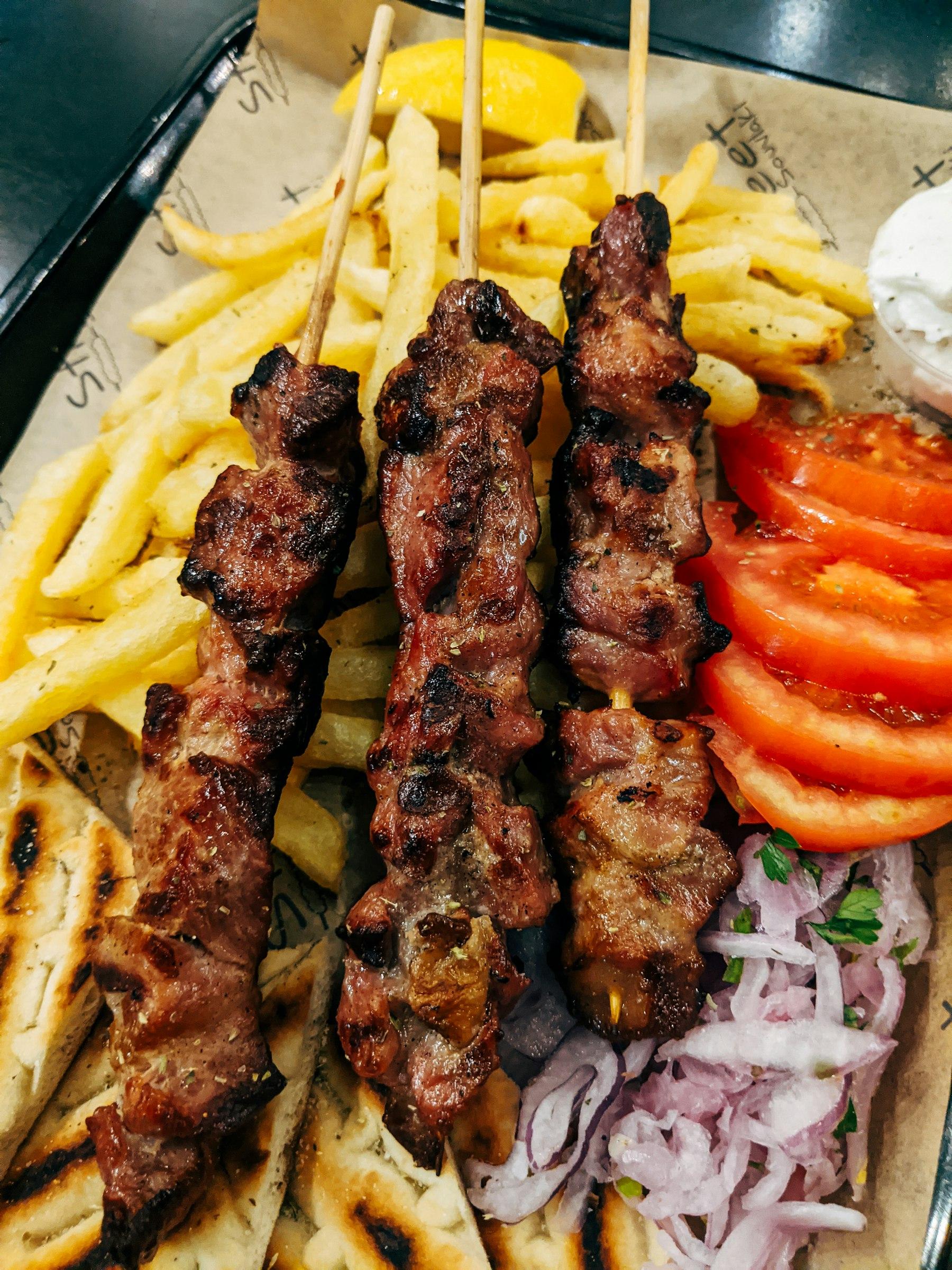
If you've ever ordered Greek food, you've probably come across both gyros and souvlaki.
They're two of the most recognizable dishes in Greek cuisine, and they're both delicious. But despite often appearing alongside each other on restaurant menus, they're not the same thing.
So what's the difference between a gyro and souvlaki?
It mostly comes down to how the meat is prepared and cooked.
What Is a Gyro?
A gyro (pronounced YEE-roh) is made with seasoned meat cooked on a vertical rotisserie.
As the meat slowly cooks, the outside develops a flavorful, browned exterior. Thin slices are shaved off and typically served in warm pita bread with ingredients such as tomatoes, onions, and tzatziki.
Pork and chicken are common choices in Greece, while lamb and beef combinations are also familiar in other countries.
The name comes from the Greek word for turning, which describes the rotating cooking method.
A gyro is especially recognizable for its combination of tender meat, crispy edges, fresh toppings, and creamy sauce.
What Is Souvlaki?
Souvlaki (pronounced soo-VLAH-kee) consists of small pieces of meat cooked on a skewer.
The meat is typically marinated or seasoned before being grilled, giving it a smoky flavor and slightly charred exterior.
Pork and chicken are popular options, although other meats can also be used.
Souvlaki can be served directly on the skewer, on a plate with sides, or wrapped in pita with vegetables and sauces.
Unlike gyro meat, which is shaved from a rotating spit, souvlaki is cooked in individual pieces.
What's the Difference Between a Gyro and Souvlaki?
The biggest difference is the cooking method.
| Gyro | Souvlaki |
|---|---|
| Cooked on a vertical rotisserie | Grilled on skewers |
| Thinly sliced meat | Small pieces of meat |
| Often has crispy edges | Often has a grilled, smoky exterior |
| Commonly served in pita | Served on skewers, plates, or in pita |
Both can be served with similar toppings, which is why they can sometimes look almost identical when ordered as sandwiches.
What About a Greek Pita Wrap?
Here's where things can get a little confusing.
In Greece, you might order a pita gyro or pita souvlaki. Both can include meat, tomatoes, onions, tzatziki, and sometimes fries.
The difference is still the meat itself.
A pita gyro contains meat shaved from a vertical rotisserie, while a pita souvlaki contains grilled pieces of meat.
You'll also encounter different regional and restaurant-specific preparations, so menus aren't always identical.
Which One Should You Order?
That depends on what you're in the mood for.
Go with a gyro if you like:
- Thinly sliced, seasoned meat.
- Crispy edges and tender interior.
- A classic combination of meat, pita, and tzatziki.
Go with souvlaki if you like:
- Grilled meat with a smoky flavor.
- Individual pieces of meat.
- Something simple and fresh off the grill.
Honestly, both deserve a place in your regular Greek food rotation.
The Bottom Line
Gyros and souvlaki are two different ways of enjoying one of the best parts of Greek cuisine: perfectly prepared meat paired with fresh ingredients and simple flavors.
If you've only ever ordered one, try the other next time you visit a Greek restaurant.
You might discover a new favorite.
And if you're already loyal to one, we'll leave the debate up to you.
Team Gyro or Team Souvlaki?
Keep reading

Greek-American Community
Growing Up Greek: The Food Traditions That Follow Us Everywhere
From Sunday dinners and family recipes to Greek festivals and holiday traditions, explore the food and memories that connect Greek communities across generations.

Restaurant Discovery
What Actually Makes a Great Greek Restaurant?
What separates a good Greek restaurant from a great one? Explore the food, hospitality, atmosphere, and traditions that make Greek dining special.
Greek Food Culture
Greek Food Is More Than Gyros: A Guide to the Dishes You Should Know
Greek cuisine goes far beyond gyros. Discover traditional Greek dishes, from meze and spanakopita to moussaka, fresh seafood, and regional specialties.